


Flux leakage testing
Flux leakage testing is a non-destructive method for detecting surface and internal defects in ferromagnetic materials. By magnetizing the test object and measuring local field disturbances, the method reliably identifies imperfections before the material is further processed or installed.
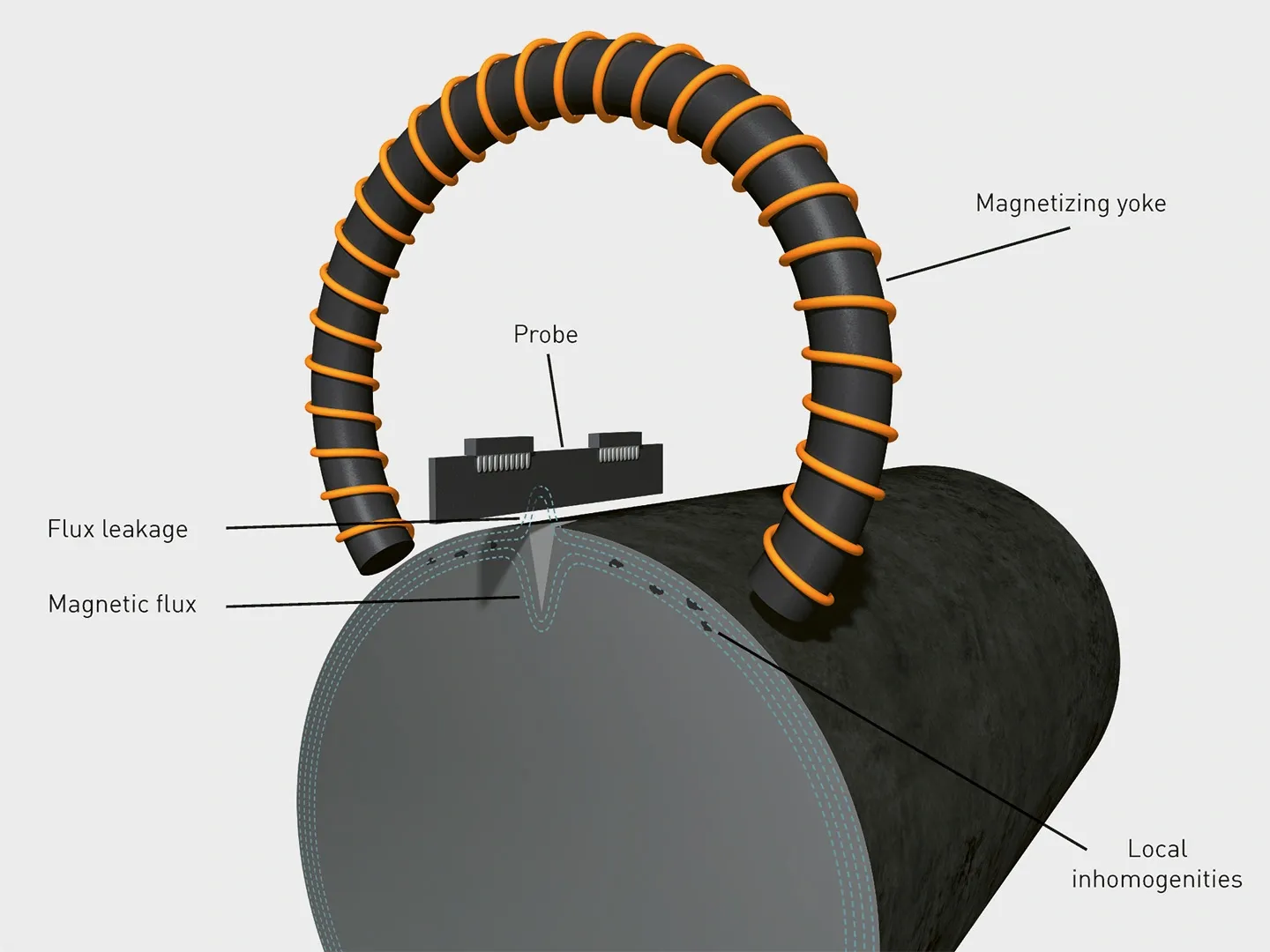
In magnetic flux leakage testing, a strong magnetic field is applied to magnetize ferromagnetic materials such as steel. In flawless areas, the magnetic flux flows uniformly through the material. Defects such as corrosion, pits, or wall-thickness variations disturb this flow, causing magnetic field lines to leak out at the surface.
Sensors positioned around the test object detect these magnetic leakages and convert them into measurable signals. The resulting data reveal the location, size, and orientation of flaws on both the inner and outer surfaces. This non-destructive testing method enhances safety and quality by identifying material defects early – before the components are further processed, installed, or subjected to operational stress. With its precision, speed, and reliability, flux leakage testing is a cornerstone of modern quality assurance in ferromagnetic materials.
Application Examples
AC Flux Leakage Testing
Alternating field flux leakage testing (AC-FL) uses two encircling magnetization yokes through which an alternating current flows. These yokes magnetize the test material contactlessly in the transverse direction, concentrating the magnetic flux near the surface. This makes the method especially sensitive to µm-sized surface defects from approximately 100 µm depth.
The test shoes between the yoke legs guide protected probes that scan the surface in contact. Small discontinuities cause localized magnetic leakage, which is detected as a signal. Due to the skin effect, higher frequencies restrict the magnetization to a thin surface layer, enabling precise detection of very shallow defects. The AC flux leakage method is particularly suited for detecting longitudinal surface cracks on hot-rolled products such as bars or billets.
DC Flux Leakage Testing
Constant field flux leakage testing (DC-FL) magnetizes the entire material cross-section, allowing both inner and outer defects to be detected. The magnetic field is generated either by rotating yokes (for longitudinal defects) or by stationary encircling coils (for transverse defects).
At defect locations, the magnetic flux emerges from the material and is recorded by magnetic field sensors positioned circumferentially around the test object. Because the entire volume is magnetized, DC flux leakage testing is especially effective for detecting deep or internal defects in thick-walled tubes. The method combines high sensitivity with robust operation, making it ideal for continuous inspection in the steel and tube industries.
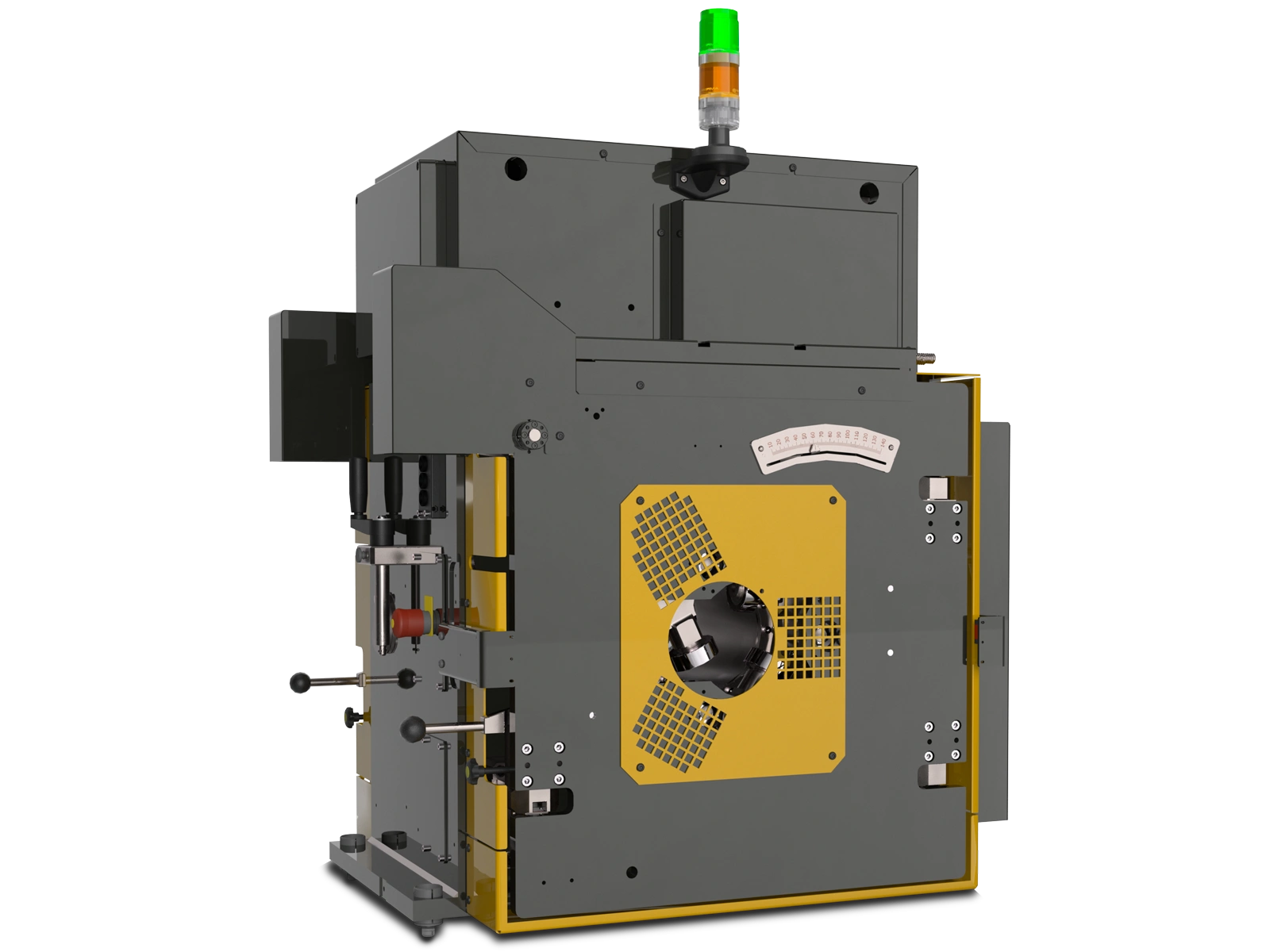
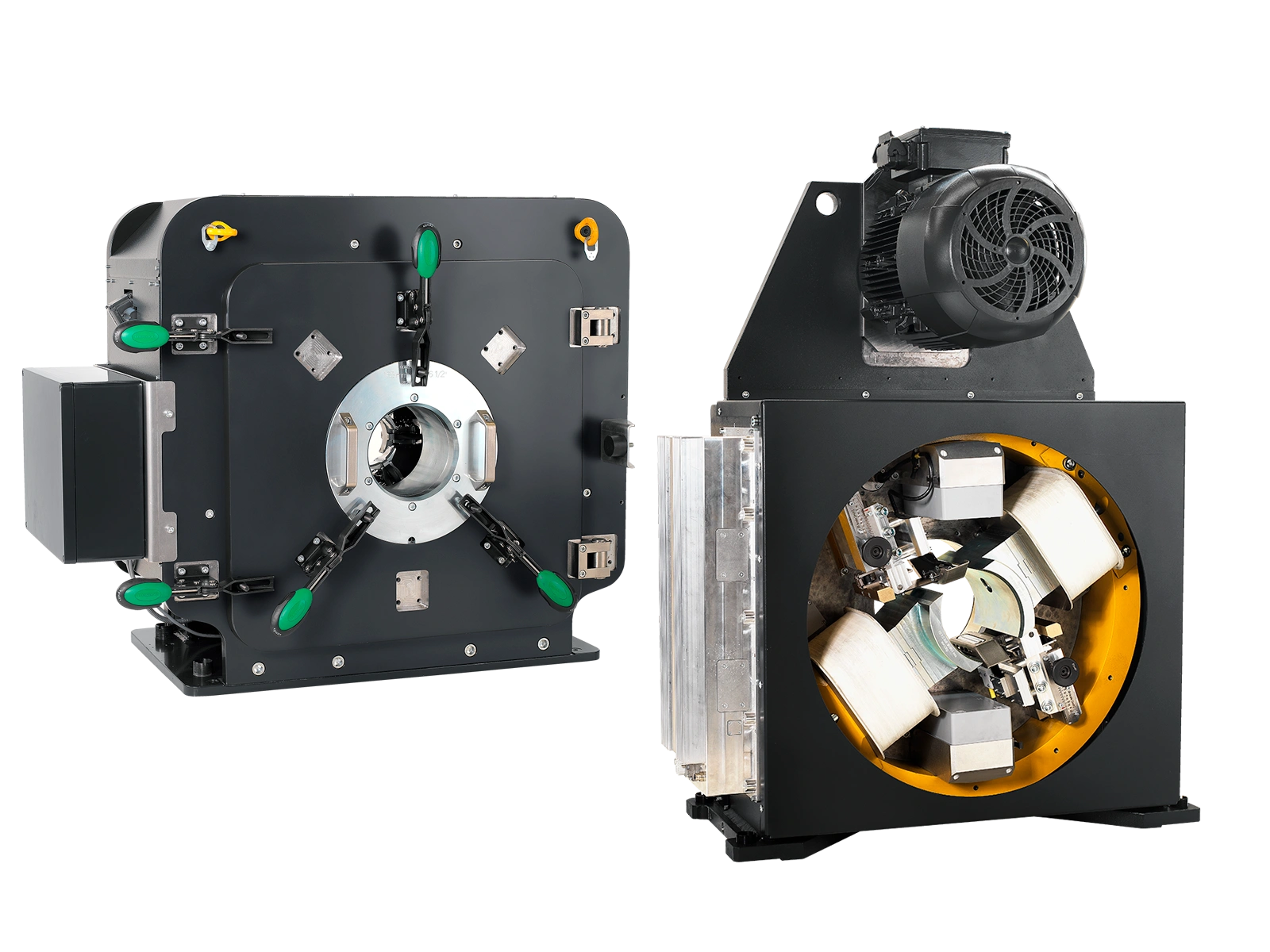
ROTOMAT / TRANSOMAT Product Family
DC magnetic flux leakage testing of tubes for longitudinal, transversal, oblique and point-shaped defects