


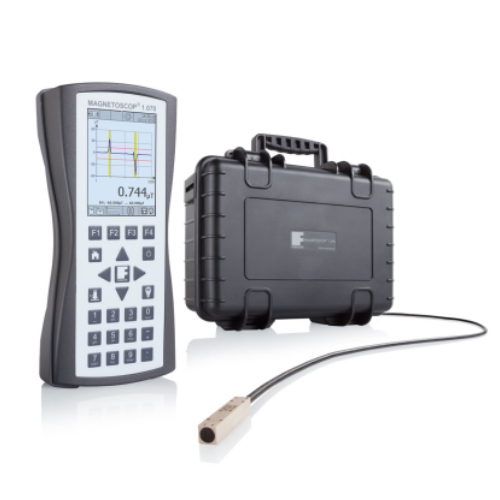
Portable Magnetometer
- Portable, microprocessor-controlled magnetometer system
- Probes for the measurement of the magnetic flux density as absolute or gradient value
- Probes for determination of the relative magnetic permeability μr in accordance with IEC 60404-15 und ASTM A342/A342M
- USB interface for data transfer
- SD card for storage of measurement data and parameters
- Peak value detection and storage
- Adjustable limits for threshold values
- Visual and acoustic alarm
- Single or batch measurement
- Editable measuring- and test procedures including graphical operator assistance
- Battery or mains operated
- PC software for data analysis and report generation
Magnetic Field Strength Tester for Industrial Inspection
The MAGNETOSCOP 1.070 is a portable magnetic field strength tester designed to measure residual magnetism in metal components. The device allows engineers to verify magnetic field strength directly on parts without damaging the material.
Residual magnetism often occurs during machining, grinding, welding, or forming processes. If not detected, it can cause problems such as metal particle attraction, assembly issues, or inaccurate measurement results.
Using a magnetic field strength tester helps ensure that components meet demagnetization requirements and quality standards before further processing or assembly.
Residual Magnetism Measurement for Metal Components
Residual magnetism measurement is important in many manufacturing processes where magnetic fields can affect product performance.
It measures the magnetic field strength on the surface of a component and helps determine whether the part requires demagnetization.
Typical materials tested include:
steel components
machined metal parts
bearings and precision components
metal parts after welding or grinding
Because the measurement is non-destructive, testing can be performed directly on finished components without affecting the material.
Typical Applications of Magnetic Field Strength Testing
Magnetic field strength testers are used in manufacturing environments where residual magnetism must be monitored and controlled.
Typical applications include:
checking residual magnetism after machining processes
verification of demagnetization in production lines
inspection of bearings and precision mechanical parts
measurement of magnetic field strength in steel components
quality control in metal manufacturing processes
Monitoring residual magnetism helps prevent problems such as chip attraction, contamination, and assembly difficulties.
Industries Using Magnetic Field Strength Measurement
Magnetic field strength testing is commonly used in industries where metal components must be free from residual magnetism.
Common industries include:
automotive component manufacturing
bearing manufacturing
steel and metal processing industries
aerospace component manufacturing
precision machining and engineering industries
In these industries, controlling residual magnetism helps ensure product reliability and manufacturing quality.
Advantages of Portable Magnetic Field Strength Testing
Portable magnetic field strength testers offer several advantages for industrial inspection.
Key benefits include:
non-destructive testing of magnetic field strength
portable inspection directly on metal components
fast verification of demagnetization processes
detection of residual magnetism in precision components
improved quality control during manufacturing
These advantages make magnetic field strength testing an important part of industrial quality inspection and demagnetization verification.
Discuss Your Magnetic Field Measurement Application
If your process requires measurement of residual magnetism or verification of demagnetization, provides reliable magnetic field strength measurement for industrial inspection.
Our engineers can help determine the appropriate configuration based on the component type, measurement range, and inspection requirements.
Contact us to discuss your magnetic field strength testing requirements for manufacturing or quality inspection.